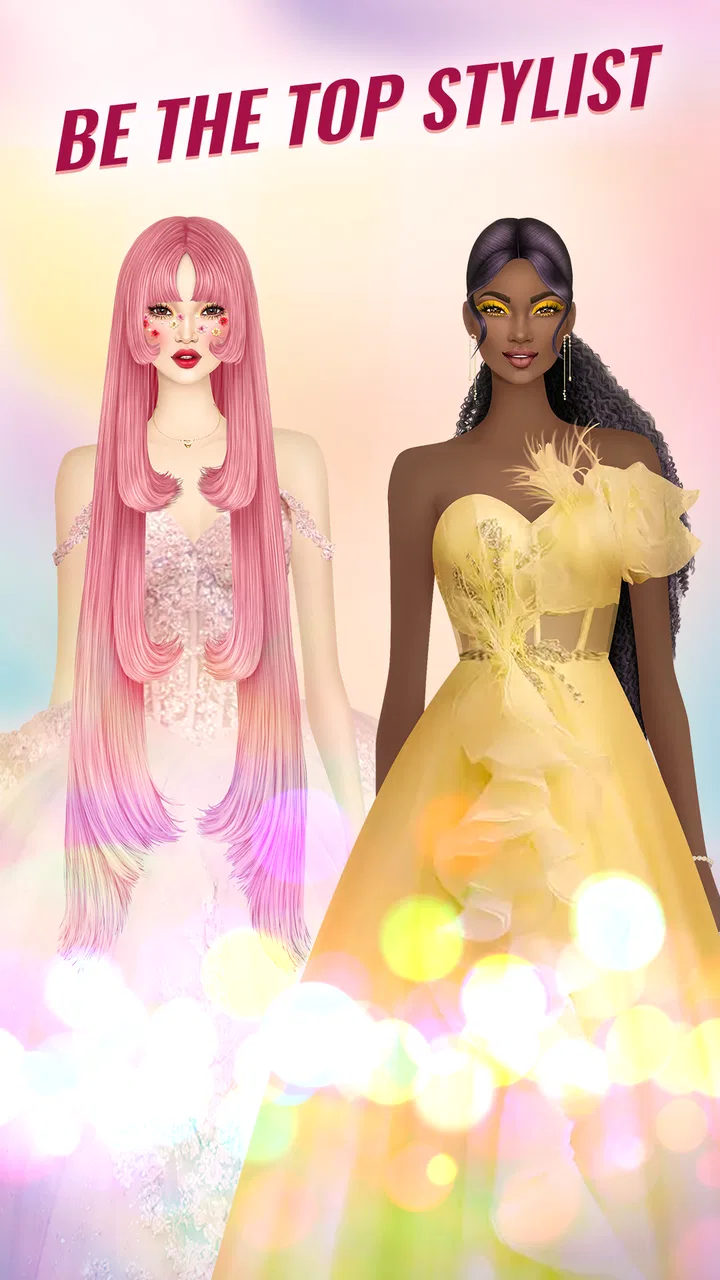
Covet Fashion: Dress Up Game
- 3.8
- Rating
- 50.00M
- Installs
- Free
- Price

 Analysis by App-foxy
I approached Covet Fashion: Dress Up Game expecting a simple dress-up pastime, but it quickly showed more depth than a basic wardrobe simulator. The central idea is straightforward: I create looks for themed challenges, submit them for judging, and use the results to improve future outfits. What makes the experience hold my attention is the combination of creativity, restrictions, and comparison with other players. I am not only choosing attractive clothes; I am trying to understand what a brief is asking for and make a convincing outfit from the pieces available to me.
That makes it a good fit for short sessions, especially when I want something visual and low-pressure. It is free to download, aimed at Everyone, and developed by Crowdstar Inc. The game has been available since October 25, 2013, so it has had plenty of time to establish its fashion-focused identity. With more than 50 million installs and an average score of 3.9 from roughly 790 thousand ratings, it is clearly a familiar name in casual mobile gaming, although that rating also suggests the experience will not suit every player equally.
How the everyday fashion challenge works
I find the challenge format easiest to follow when I treat the brief as a checklist for the finished look, not as a prompt to browse every wardrobe category. That gives each session a clear route from idea to submission and makes it easier to pause without losing my train of thought. It also sets up a closer look at how the game’s visual choices feel in practice.
You May Also Like

 Blood Strike: 2.5 Anniversary
Blood Strike’s Loadouts Turn Every Drop Into a Tactical Gamble
A close look at Blood Strike’s custom loadouts: how fast access to signature weapons reshapes its battle royale rhythm, rewards preparation, and narrows the gap between fights.

 Pandora - Music & Podcasts
Pandora’s Music Is Easy to Start, but Harder to Recover
Pandora’s strength is its low-effort path from a seed to a station. Its weak spot is how much confidence it asks you to place in connection, setup, and quiet recovery.

 8 Ball Pool
 Is Built on Rivalries, Rematches, and Routine
A close look at the rivalries, rematches, shared routines, and unanswered safety questions that turn a quick pool match into a persistent mobile community.

 Samsung Music
’s Quiet Strength Is Playing What You Already Own
Its reach comes less from spectacle than from dependable access to a personal library. That simplicity is both the app’s strongest retention engine and its ceiling.

 AccuWeather: Weather Radar
AccuWeather Review: A Quick, Clear Forecast for Everyday Decisions
For everyday plans, the best forecast is the one you can understand quickly. AccuWeather makes rain timing, radar, and local conditions easy to act on, with a few trade-offs.

 Hill Climb Racing
Why Hill Climb Racing Still Turns Crashes Into One More Run
A tiny car, a bumpy hill and one more upgrade: Hill Climb Racing keeps resurfacing because its simple chaos makes every near-miss feel personal.
More From Our News Desk
View All News


Starting with the brief instead of the wardrobe
My most reliable routine begins by reading the challenge description carefully before opening the clothing categories. That sounds obvious, but it prevents a common mistake: building a beautiful outfit that does not really answer the theme. If the brief suggests a formal event, a beach setting, a historical mood, or a particular color direction, I treat those details as the foundation rather than decoration. The strongest results usually come from a coherent idea, not from selecting the most eye-catching item in isolation.
I then choose the main garment first. A dress, suit, or coordinated top-and-bottom combination gives the look its shape and determines how much room remains for accessories. After that, I add shoes, hair, makeup, jewelry, and any other available styling choices with restraint. I find that this order is faster than jumping between categories because each decision answers a practical question: what supports the silhouette, what reinforces the theme, and what would make the outfit feel overworked?
The submission stage is where the game becomes more than a personal styling tool. Other players judge the completed looks, so I have to think about readability at a glance. A subtle interpretation may be satisfying to me but less successful if the theme is difficult to recognize. This does not mean every outfit should be loud. It means the key idea should be visible through the overall combination of color, shape, and accessories.
Using ordinary sessions efficiently
A realistic way to play is to treat each challenge as a small creative task rather than an open-ended shopping session. If I only have a few minutes, I make a clear first draft, check whether every required element is covered, and submit without endlessly replacing minor details. When I have more time, I compare two or three complete versions instead of testing every possible item. This keeps the game relaxing and avoids turning a casual activity into wardrobe administration.
One useful habit is to remember successful combinations by their role, not only by their appearance. For example, I may remember that a certain hairstyle works well when the outfit already has a dramatic neckline, or that a simple accessory balances a heavily patterned dress. This kind of mental catalog becomes more valuable than trying to memorize every individual item. It also helps me make decisions quickly when a new brief resembles an earlier one.
The game is especially enjoyable when I want a creative break without learning complicated controls. The interaction is visual and easy to understand, and the challenge format gives each session a clear stopping point. However, players seeking a traditional story, character development, or action mechanics may find the loop narrow. The pleasure comes from styling, submitting, and refining choices; it does not transform into a different genre halfway through.
What the results can and cannot tell me
Results are useful feedback, but I do not treat them as an absolute measure of taste. A lower result can mean the outfit missed the theme, but it can also reflect the fact that another interpretation was more immediately recognizable. I use the outcome as a prompt to inspect my choices: Was the central color clear? Did the accessories compete with the main garment? Did the hairstyle suit the setting? That review process is more helpful than simply copying the look that performed well.
There is also a social comparison element that can be motivating and frustrating. Seeing other entries gives me ideas for proportion and styling, yet it can make the game feel less personal if I focus only on ranking. I enjoy it most when I set a small goal for each challenge, such as making a restrained formal look or using an unusual color combination, and then judge my progress by how well I executed that idea.
Settings and device habits worth checking
Before settling into regular play, I recommend checking the game’s available settings and the way notifications behave on the device. I prefer to keep only alerts that help me remember an important challenge or result, because frequent reminders can make a relaxing game feel demanding. The exact options can vary by device and version, so I would inspect the menus personally rather than assume every phone presents the same controls.
It is also sensible to review purchase protections before playing for long periods, particularly if the device is shared with children. The game is free to start, but optional purchases range from $0.99 to $99.99 per item. That wide range makes it worth deciding in advance whether I will spend anything, and if so, what limit feels comfortable. I find that a clear boundary protects the creative part of the experience from becoming an impulse-shopping exercise.
Another practical check is storage and connection behavior. I keep the operating system at least at version 8.0, which is the stated minimum, and I make sure the app has enough room to run comfortably. Fashion games rely heavily on visual content, so a crowded or older device may make browsing less pleasant even when the game itself is easy to operate. I also avoid starting a detailed styling session when I know I may lose access to a stable connection.
These checks are not glamorous, but they improve the routine. I want the game to open when I choose it, not to dictate when I play. I also want spending decisions to remain deliberate. For me, those two small adjustments make a bigger difference than trying to optimize every outfit.
Faster styling patterns that save time
Experienced play is less about tapping quickly and more about reducing unnecessary decisions. I begin with a theme sentence in my head: “elegant evening,” “relaxed outdoor,” or whatever the brief suggests. Then I select items that support that sentence. If a piece does not strengthen the idea, I leave it out, even if it is attractive on its own. This simple filter prevents the wardrobe from becoming a distraction.
I also use a two-pass method. In the first pass, I build a complete outfit without trying to perfect it. In the second, I inspect only the areas most likely to change the impression: the main color balance, the hairstyle, the shoes, and one or two accessories. This is quicker than making tiny edits after every selection, and it helps me see the outfit as a whole.
Another effective pattern is to establish a focal point. If the dress has a strong print or an unusual shape, I keep the remaining choices quieter. If the clothing is simple, I may let the hair or accessories provide the visual interest. This approach is particularly useful in challenges where the available items are not equally strong. Instead of trying to make every category dramatic, I decide where the viewer’s eye should land.
I have also learned to separate “theme accuracy” from “personal taste.” Sometimes I prefer a minimalist look, but the brief clearly calls for something festive or theatrical. In those cases, I first satisfy the theme and then express my taste through the details. That compromise gives the submission a better chance of being understood while still allowing me to make it feel like my own work.
Working with a limited wardrobe
A large wardrobe can be helpful, but it is not the only route to enjoyable play. When my choices are limited, I focus on combinations that change the impression of a piece. The same garment can read differently with a polished hairstyle, casual shoes, or a contrasting accessory. I also pay attention to color relationships. A small coordinating detail can make an otherwise disconnected outfit feel intentional.
This is where the game can be more thoughtful than it first appears. The challenge is not always to find the perfect item; sometimes it is to make a workable item serve the brief. I find that constraint encourages better decision-making because I stop waiting for an ideal option and start considering structure, balance, and context.
At the same time, limited choices can become a genuine source of friction. If a challenge strongly favors a style I cannot reproduce with my available wardrobe, the result may feel decided before I begin. Players who dislike progression systems that encourage collecting may become impatient here. I would be more comfortable recommending the game to someone who enjoys gradual improvement than to someone who wants every styling possibility immediately.
Where the deeper strategy reaches its limits
There is a ceiling to how much control I have over the final outcome. I can make a coherent outfit, but I cannot control how other players interpret the theme or what visual approach they prefer. That uncertainty is part of the appeal, yet it also means the judging system should not be treated like a precise design assessment. A result can be disappointing even when the outfit is thoughtful.
Progress can also feel more comfortable for players willing to be patient. The free entry point is welcoming, but optional purchases may become tempting when I want to expand my choices or move through the experience more quickly. I would not recommend spending simply to chase every challenge. A better approach is to play with the wardrobe already available, decide whether the creative loop remains enjoyable, and only then consider whether an optional purchase genuinely improves the experience.
The game may also be a poor match for someone who wants a completely offline pastime or a game with a strong narrative arc. Its appeal depends on repeated fashion challenges and comparison, not on exploring a large world or mastering complex mechanics. Likewise, players who become stressed by rankings may need to keep their focus on experimentation rather than results.
How it compares with simpler dress-up alternatives
Compared with a basic dress-up app, this game gives my choices a clearer purpose. Instead of dressing a character only for a screenshot, I am responding to a brief and presenting the result for evaluation. That adds motivation and makes small details feel meaningful. It also creates more pressure, though, because the outfit is no longer judged only by whether I like it.
Compared with a traditional casual game built around matching, endless tapping, or short puzzles, the pace is more reflective. I spend more time looking and comparing than reacting. That makes it a better choice when I want a visual creative activity, but a weaker choice when I need immediate action or a quick score-based distraction.
Its strongest middle ground is between a fashion sandbox and a competitive challenge game. I can experiment privately with color and shape, then enter a shared judging loop. The trade-off is that the game’s long-term appeal depends on whether I enjoy repeating that process. If I do, the structure offers plenty of room to refine my eye. If I do not, the repeated cycle may feel similar from one session to the next.
Who will get the most from it
I would recommend it to players who enjoy styling, visual comparison, and gradual improvement. It works well for someone who likes making themed outfits, noticing how accessories change a silhouette, and learning from other entries. It is also approachable for casual players because there is no complicated control scheme to master before creating a look.
It can be a good shared activity too. A friend and I could interpret the same brief separately, compare our choices, and discuss why one outfit feels more convincing. That kind of conversation is more rewarding than simply asking which look is prettier, because it brings attention to theme, proportion, and visual storytelling.
I would suggest skipping it if you dislike cosmetic collection, competitive judging, or optional purchases appearing around a free game. I would also look elsewhere if my priority were a deep story, action, or a fully self-contained offline experience. The game knows what it wants to be, and its narrow focus is both its identity and its main limitation.
My final routine for playing well without overthinking
My preferred approach is simple: read the brief, choose a focal garment, build a complete first version, and make one deliberate refinement pass. I keep the theme visible, avoid adding details merely because they are available, and treat results as feedback rather than a verdict on my taste. I also check spending controls and notification settings early, so the game remains a choice rather than a source of pressure.
The current version is 25.02.223, and the game remains free to download for players who want to try its fashion challenges without an entry fee. Its mature presence, broad install base, and substantial review activity show that the format has lasting appeal, while the 3.9 average reminds me to keep expectations realistic. This is not a flawless styling tool, and it will not satisfy everyone.
Still, I find the core loop easy to return to. The best moments come when a restricted brief forces me to rethink a familiar item and the final outfit feels more coherent than expected. For me, the real strength is the repeatable styling habit: make a clear choice, inspect the balance, and learn from the next challenge. If that sounds more enjoyable than chasing a perfect score, this casual fashion game is worth trying.
FAQs for Covet Fashion: Dress Up Game
01What is Covet Fashion: Dress Up Game about?
Covet Fashion: Dress Up Game is a style-centric mobile game available on both Android and iOS platforms. Players can express their fashion creativity by dressing up their avatars in the latest trends and styles. The game features a variety of challenges, fashion events, and competitions that allow users to showcase their styling skills and get feedback from other players.
02Is Covet Fashion free to play, or does it require purchases?
Covet Fashion is free to download and play, but it offers in-app purchases. These purchases can enhance the gaming experience by providing additional fashion items, accessories, or exclusive event access. While the game is enjoyable without spending money, many players choose to make purchases to expand their wardrobes and progress faster in competitions.
03How does the social aspect of Covet Fashion work?
The social component of Covet Fashion allows players to connect with friends and other fashion enthusiasts worldwide. Users can join fashion houses, participate in group events, and vote on each other's outfits. This interaction not only builds a sense of community but also provides valuable feedback and inspiration from fellow players.
04What kind of challenges can players expect in Covet Fashion?
Players can expect a range of challenges that test their fashion sense and creativity. These challenges often revolve around specific themes or events, such as a red carpet gala or a beach party. Players must choose the best outfits within a budget, considering factors like style, occasion, and season, to impress judges and earn rewards.
05Are there any tips for beginners in Covet Fashion?
For beginners, it's essential to focus on unlocking as many clothing items as possible to increase styling options. Joining a fashion house early can provide support and advice from experienced players. Additionally, participating in daily challenges and events will help earn in-game currency and unlock new levels. Observing top-voted outfits can also offer insights into current fashion trends within the game.
Pros
- Extensive wardrobe options.
- Engaging fashion challenges.
- User-friendly interface.
- Regular updates with new styles.
- Interactive community features.
Cons
- In-app purchases can be pricey.
- Requires constant internet.
- Occasional loading issues.
- Limited free resources.
- Ads can be disruptive.

Covet Fashion: Dress Up Game
Gallery